
 By
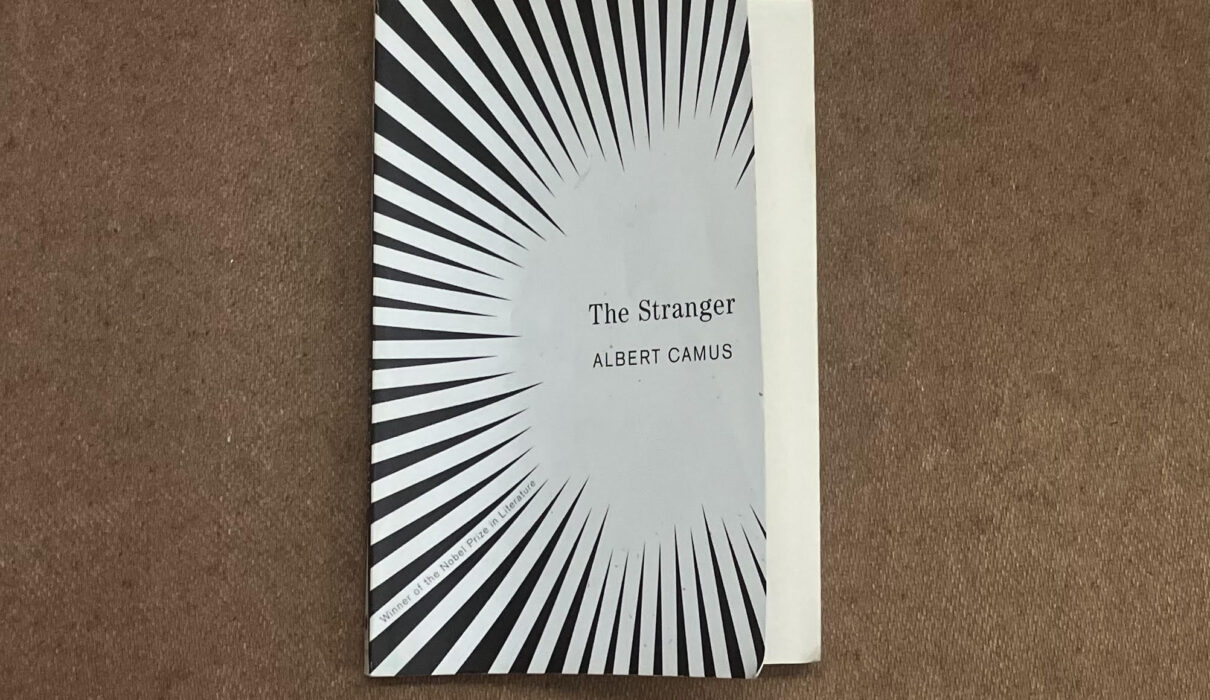
By This weekend, I read ‘The Stranger’ by Albert Camus once again. It is approximately a 125 page read and can be easily read in a few hours, even for a first time read. A few years ago, I picked up this book when I was on the lookout for short philosophical novellas. This novel is truly a masterpiece and my testimony is of least importance in this matter; for the author is a Nobel Prize Winner in Literature. It proves that in order to be a literary genius – you don’t need perfect grammar, you don’t need long sentences or an excellent vocabulary; what you need is the ability to pour your heart out honestly on paper. The novel was first published in 1942, but it is still relevant today and will remain relevant as long as we have hearts in our bodies.
Let me briefly make an attempt to summarise this masterpiece – The story is about a young man named Meursault (this is hardly used in the book, since it is written in first-person) who lives life casually with no particular ambition, works in a company, chills at home, dates women, goes out on weekends, and does everything what a normal person would do. The first half of the novel basically describes all these events in the life of the protagonist. The first part ends with the protagonist of the story murdering a man by shooting. I feel that at the end of the first part, the author could choose to steer the story in any direction and any train of thought; but the author chooses the philosophical route. It is here that the novel truly turns into a timeless piece. To put it in short- the second part of the novel magnifies the emotions he goes through in prison and finally his trial and execution.
There are certain statements of the second part of the book which stand out and are thought provoking:
- ‘I understood very well that people would forget me when I was dead.’
We talk of being remembered after our death- that’s why we end up doing things which we think as challenging, thinking that people would remember them after your death. Forget death- the same is true when we hop from one company to another; we think that we will be remember for something specific- No. Nothing persists- everything is seasonal.
- ‘After a while, you could get used to anything’
Initially, when the protagonist enters prison, the mind of the protagonist is also engulfed in the new changes around him, to the sudden change in his living style. Over a period of time, as he becomes sure that he won’t get out of the prison, he finds it difficult to adjust – the urge to simply get out and walk, his urge to smoke or for women. He then understands, by and by, what it means to be in prison and what it means for independence to be curtailed.
- ‘I had only a little time left and I didn’t want to waste it on God’
When the priest comes to offer him discourses on salvation and being forgiven for his sins, the protagonist is not interested in this topic. He says that all that has no meaning and that there is no meaning in life.
- ‘I was sure about me …. Sure of death I had waiting for me’
Towards the end, protagonist becomes aware of his reality; that death for him was certain. He says he was never certain about anything in life, but in death everything is certain and at least that is the hold we have on life- our death
Throughout the novel, the underlying theme is clear and that is about his emotions and thoughts being misunderstood. His thoughts are considered as something truly grave, and are used to be a narrative against him in his own trial.
I think, I too am like the protagonist of Camus’s stranger – I too do all the things and go through all the emotions of the protagonist; only for the murder.
