
 By
By It had rained cats and dogs the previous night and the drizzle still had not stopped in the wee hours of the morning. I had to drive 250 km- from my village to the city where I work, after an extended weekend.
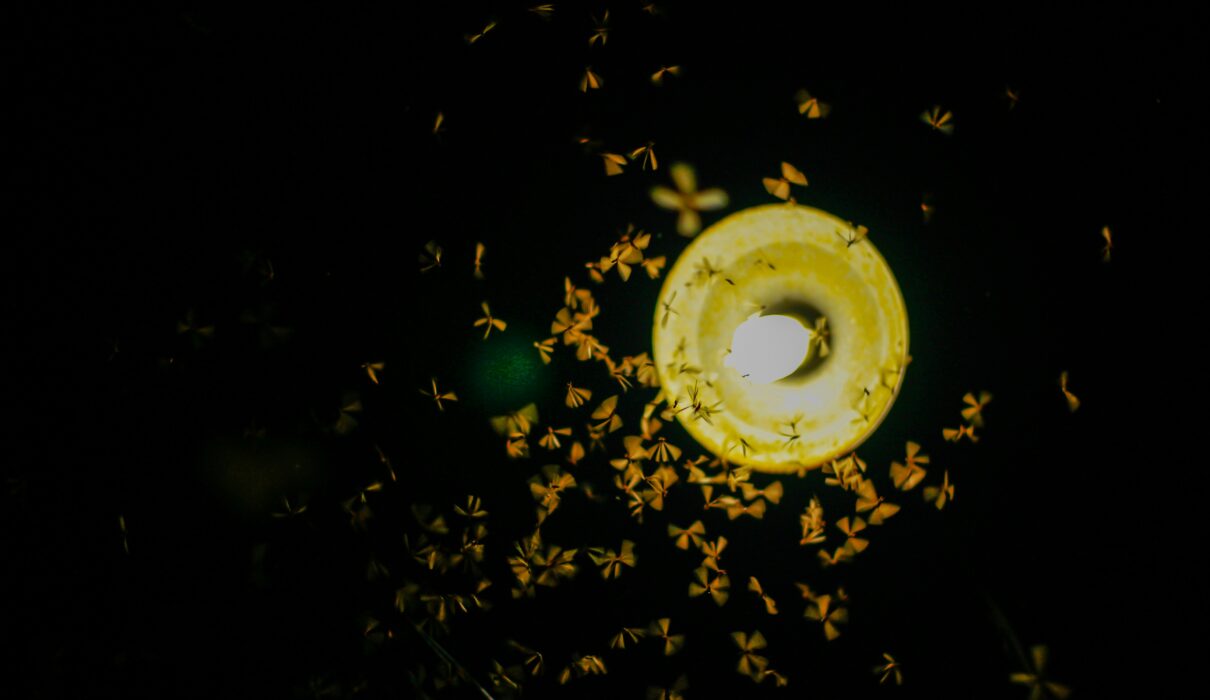
My home situated in the middle of the fields and has floodlights on all four sides. Due to the heavy rains, there were lifeless bodies of thousands of ‘parwane*’ or light moths that had fallen over my car and many more circling towards the light.
But before all this, let me first explain what is ‘Parwana’ (‘Parwane’ is plural). Parwana is basically a moth that gets attracted to light. In fact, it is so crazy for the light that it goes around the light in circles and sometimes, does it so violently that it hits the warm light, burns itself, especially its wings and that causes its immediate and instant death.
Scientifically, Parwane is aligned with the light of the moon for navigation. However, as the moon is far away, they do not burn themselves and this helps then to navigate. Further, when they see another source of light, they get confused and instead take it as a source of navigation, and leads to their instant death because of it.
Urdu poetry, over the decades has made the concept of Parwana extremely romantic and made their death symbolise a sacrifice for love. The ‘light’ for which they are ready to burn is love and ‘Parwane’ represents the lover. They are so committed towards love that if it means giving their life, then they are ready to do even that too.
There are many popular Hindi language songs that depict this.
For example:The singer Kishore Kumar’s song “Pyaar deewana hota hai, mustana hota hai”
“Shama kahen parwane se pare chala jaye
Meri tarah jal jayega, yehan nahi aa”
(Translated as: The light tells the Parwana to move aside or it too will end up burning)
Or Kishore Kumar’s “Pal Pal dil ke paas”
“tum sochogi kyon itna mein tumse pyaar karu,
tum samzogi deewana, mein bhi ikraar karu,
deewano ki ye batein, deewane jante hai,
jalne mein kya maza hai parwane jante hai,
tum yuhi jalate rehna aa aa kur khwabon mein.”
(Translated as: You might be thinking of why I love you so much but my romantic lover words are similar to a Parwana knows the pleasure of burning itself. I want you to come into my dreams and burn me in the same way.)
The question is that the real love of ‘Parwana’ is forgotten. The moon is substituted for the false lights and the poor thing is confused finding for its real love.
What is more unfortunate in this death- that the Parwana sacrificed himself for something he did not mean to be his or that he could never even know whether his true love ‘the moon’ ever even know his name.
As Osho Rajneesh quotes it – the beauty between naiveness and trust is that of the self; a naïve one is hurt by the smallest discomfort while a trusting one gives himself away for what was never his with a smile.
*Parwane is an Urdu/Parsi language word (also commonly used in Hindi) and is used for moths that are attracted to light. They are usually known to be common during the monsoon season
